YOLO Cloud Trainer
Rapidly deploy a cloud GPU server and manage YOLO model training, format conversion, and artifact packages in one place. The web interface requires no SSH, while a Windows desktop tool initializes the remote environment in one step.
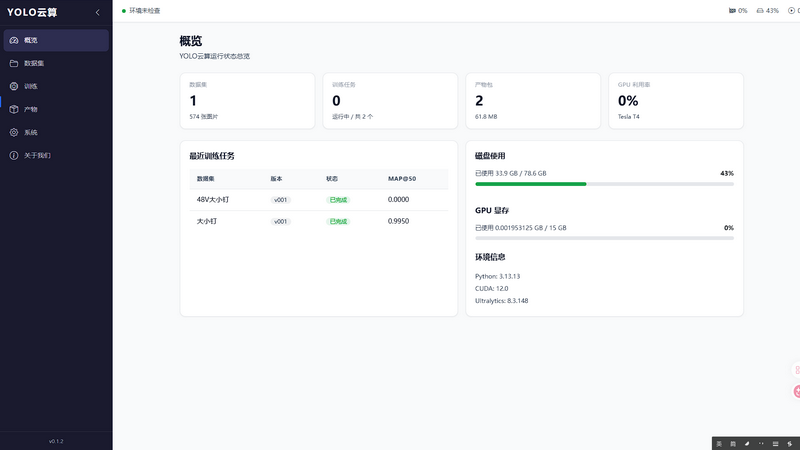
Key Features
End-to-End Dataset Lifecycle Management
Chunked ZIP uploads, resumable transfers, and intelligent deduplication, with incremental dataset merging, bounding-box previews, and stratified sampling groups.
One-Click Training and Real-Time Monitoring
Configure parameters and start training from the web interface. WebSocket streams logs and loss curves in real time, eliminating SSH polling.
Multi-Format Conversion and Artifact Packaging
Automatically exports PT → ONNX → TFLite (FP16/FP32) after training, then packages artifacts for one-click download and edge deployment.
Project Background
YOLO model training for industrial Visual Inspection depends on GPU servers. Traditional workflows require SSH, manual setup, and command-line operations. YOLO Cloud Trainer moves the workflow to the web and uses a Windows deployment tool to initialize remote environments, allowing machine-learning engineers to focus on data and models.
Technology Stack
Feature Details
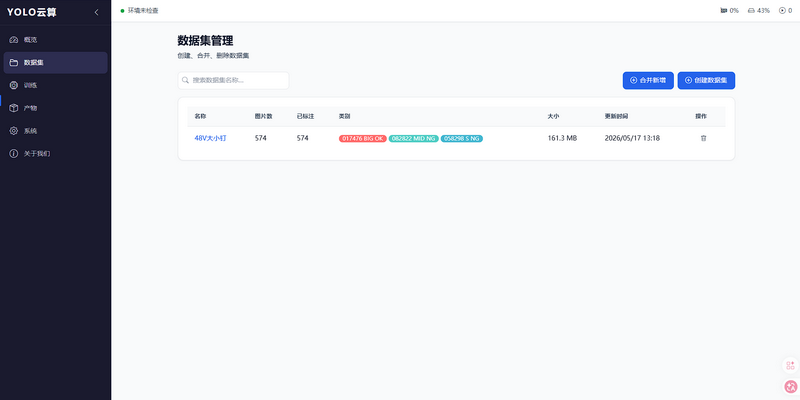
End-to-End Dataset Lifecycle Management
Uploads ZIP files in chunks with resumable transfer and pre-upload deduplication. New images merge into existing datasets, bounding boxes appear in a Canvas overlay, and stratified sampling keeps classes evenly distributed.
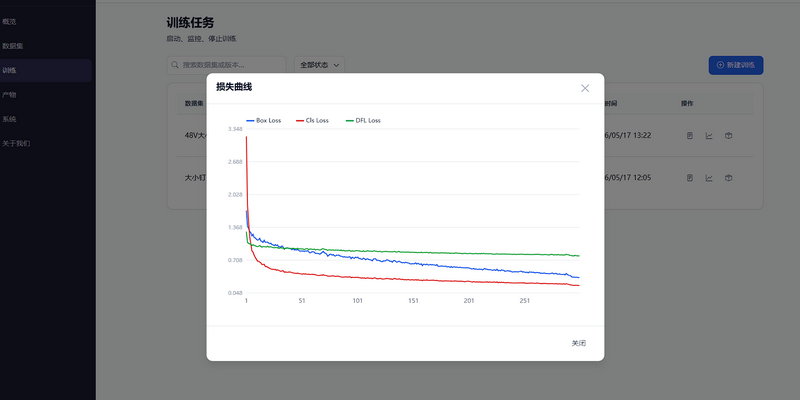
One-Click Training and Real-Time Monitoring
Select a dataset, configure parameters, and start training from the web interface. WebSocket streams logs and loss curves, with controls to stop training, paginate tasks, show a running spinner, and open artifacts for Completed tasks.
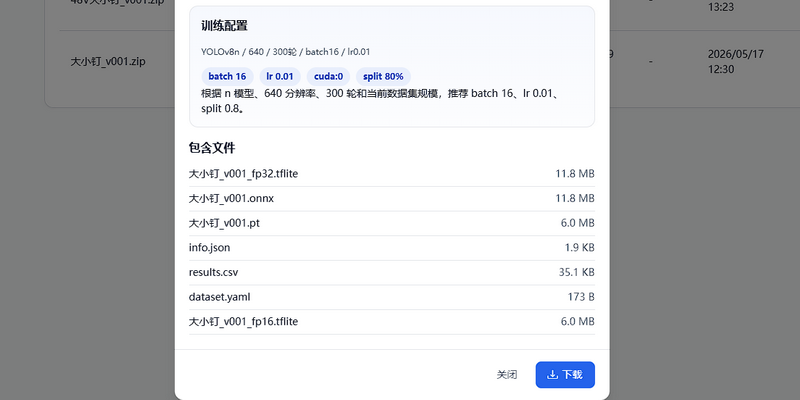
Multi-Format Conversion and Artifact Packaging
Models are converted automatically from PT → ONNX → TFLite (FP16/FP32). Separate web, training, and conversion environments prevent dependency conflicts. Artifacts are packaged as a ZIP containing model files, result CSV files, and dataset configuration.
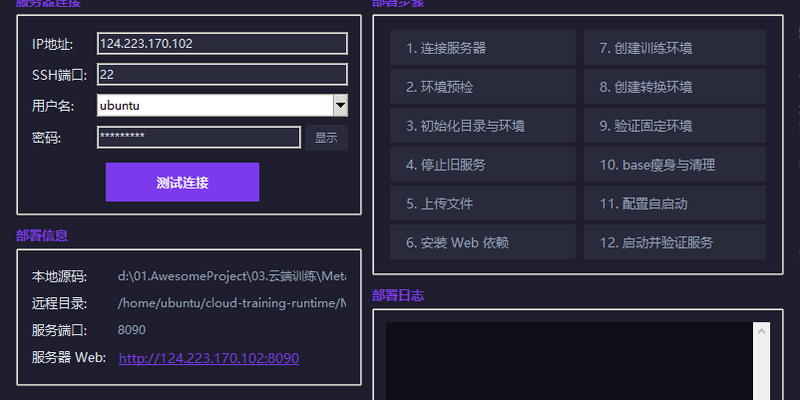
Windows One-Click Deployment Tool
The desktop tool connects to a remote Linux server over SSH, installs Miniforge, creates three isolated environments, deploys the project, and configures systemd autostart. If an environment is missing, the web app detects it and offers one-click repair.